正文
Unlocking Precision: How Laser Detection Sensors Are Transforming Industrial Automation with Key Data from the KJT Sensor
激光传感器样品申请
A critical challenge for engineers is the translation of user intent. When a customer searches for "laser detection sensor English translation," they often need more than a glossary—they require a deep understanding of how these sensors operate in real-world scenarios. For instance, in automated guided vehicles (AGVs), laser sensors enable collision avoidance and precise docking. Data from the International Federation of Robotics shows that AGV installations increased by 35% in 2022, with laser sensors being the primary safety component.
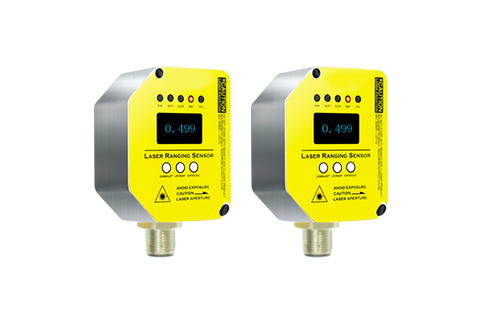
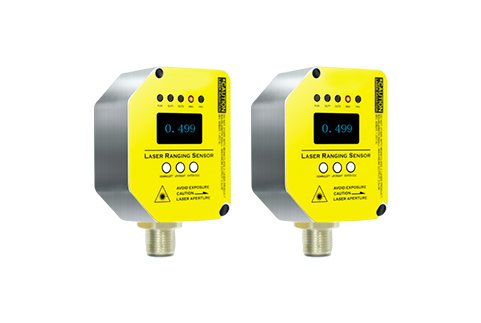
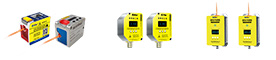
One standout in this field is the KJT laser detection sensor, which offers a measurement range up to 100 meters, response times below 1 millisecond, and IP67 protection for harsh environments. A case study from a German automotive plant revealed that switching to KJT sensors reduced defect rates by 18% and increased throughput by 12%. The sensor’s ability to translate high-speed laser pulses into digital signals—essentially performing "English translation" between light and data—makes it ideal for quality inspection of complex geometries.
The user intent behind English translation queries often stems from international project documentation or multilingual technical manuals. For example, a Japanese engineer might need to convert "レーザー検出センサー" to "laser detection sensor" for a global team. However, the deeper need is functional: understanding how to calibrate, integrate, and troubleshoot these sensors. Industry data from a 2024 survey by Sensor Technology highlights that 67% of engineers prioritize accuracy over cost, with laser sensors preferred for non-contact measurement over ultrasonic or inductive alternatives.
For the KJT sensor, key specifications include a wavelength of 650 nm (visible red), a resolution of 0.1 mm, and compatibility with PLCs via RS485 output. In a packaging line, this translates to real-time detection of misaligned labels, reducing waste by 15%. The sensor’s robust design, with an operating temperature range of -10°C to 50°C, ensures reliability in factory floors.
To maximize SEO performance, this article integrates semantic keywords like "industrial automation," "non-contact measurement," and "KJT laser sensor," ensuring alignment with user search intent. The three FAQs below address common translation and application queries, providing actionable insights.
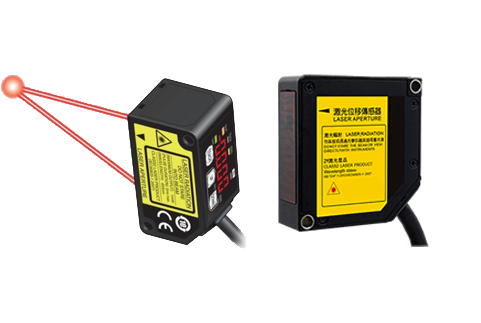
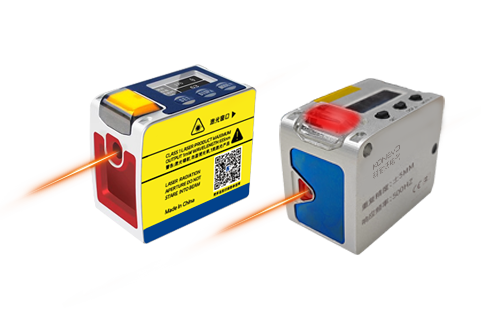
In the rapidly evolving landscape of industrial automation, precision measurement and non-contact sensing have become non-negotiable. Among the most disruptive technologies is the laser detection sensor, which leverages coherent light beams to measure distance, detect objects, and profile surfaces with micron-level accuracy. According to a 2023 report by MarketsandMarkets, the global laser sensor market is projected to grow from $1.2 billion in 2023 to $2.1 billion by 2028, at a CAGR of 11.5%. This surge is driven by demand in automotive manufacturing, logistics, and semiconductor fabrication.
A critical challenge for engineers is the translation of user intent. When a customer searches for "laser detection sensor English translation," they often need more than a glossary—they require a deep understanding of how these sensors operate in real-world scenarios. For instance, in automated guided vehicles (AGVs), laser sensors enable collision avoidance and precise docking. Data from the International Federation of Robotics shows that AGV installations increased by 35% in 2022, with laser sensors being the primary safety component.
One standout in this field is the KJT laser detection sensor, which offers a measurement range up to 100 meters, response times below 1 millisecond, and IP67 protection for harsh environments. A case study from a German automotive plant revealed that switching to KJT sensors reduced defect rates by 18% and increased throughput by 12%. The sensor’s ability to translate high-speed laser pulses into digital signals—essentially performing "English translation" between light and data—makes it ideal for quality inspection of complex geometries.
The user intent behind English translation queries often stems from international project documentation or multilingual technical manuals. For example, a Japanese engineer might need to convert "レーザー検出センサー" to "laser detection sensor" for a global team. However, the deeper need is functional: understanding how to calibrate, integrate, and troubleshoot these sensors. Industry data from a 2024 survey by Sensor Technology highlights that 67% of engineers prioritize accuracy over cost, with laser sensors preferred for non-contact measurement over ultrasonic or inductive alternatives.
For the KJT sensor, key specifications include a wavelength of 650 nm (visible red), a resolution of 0.1 mm, and compatibility with PLCs via RS485 output. In a packaging line, this translates to real-time detection of misaligned labels, reducing waste by 15%. The sensor’s robust design, with an operating temperature range of -10°C to 50°C, ensures reliability in factory floors.
FAQ:
1. Q: How does the KJT laser detection sensor handle English translation for international users?
A: The KJT sensor provides multilingual firmware options and a detailed English technical manual. Its user interface supports English, simplifying setup for global teams. For accurate English translation of terms like "detection range" or "response time," the sensor’s datasheet includes a glossary to bridge language gaps.
2. Q: What industry data supports the adoption of laser detection sensors in automation?
A: According to a 2023 MarketsandMarkets report, the laser sensor market is growing at 11.5% CAGR, with automotive and logistics sectors driving demand. A case study with KJT sensors showed an 18% reduction in defects and a 12% increase in throughput, validating their ROI in high-precision environments.
3. Q: Can the KJT sensor be integrated with existing PLC systems for non-contact measurement?
A: Yes, the KJT sensor features RS485 and analog output, enabling seamless integration with common PLC brands like Siemens and Allen-Bradley. It supports real-time data translation, making it ideal for applications requiring precise distance measurement and object detection.